What does an AI project cost?
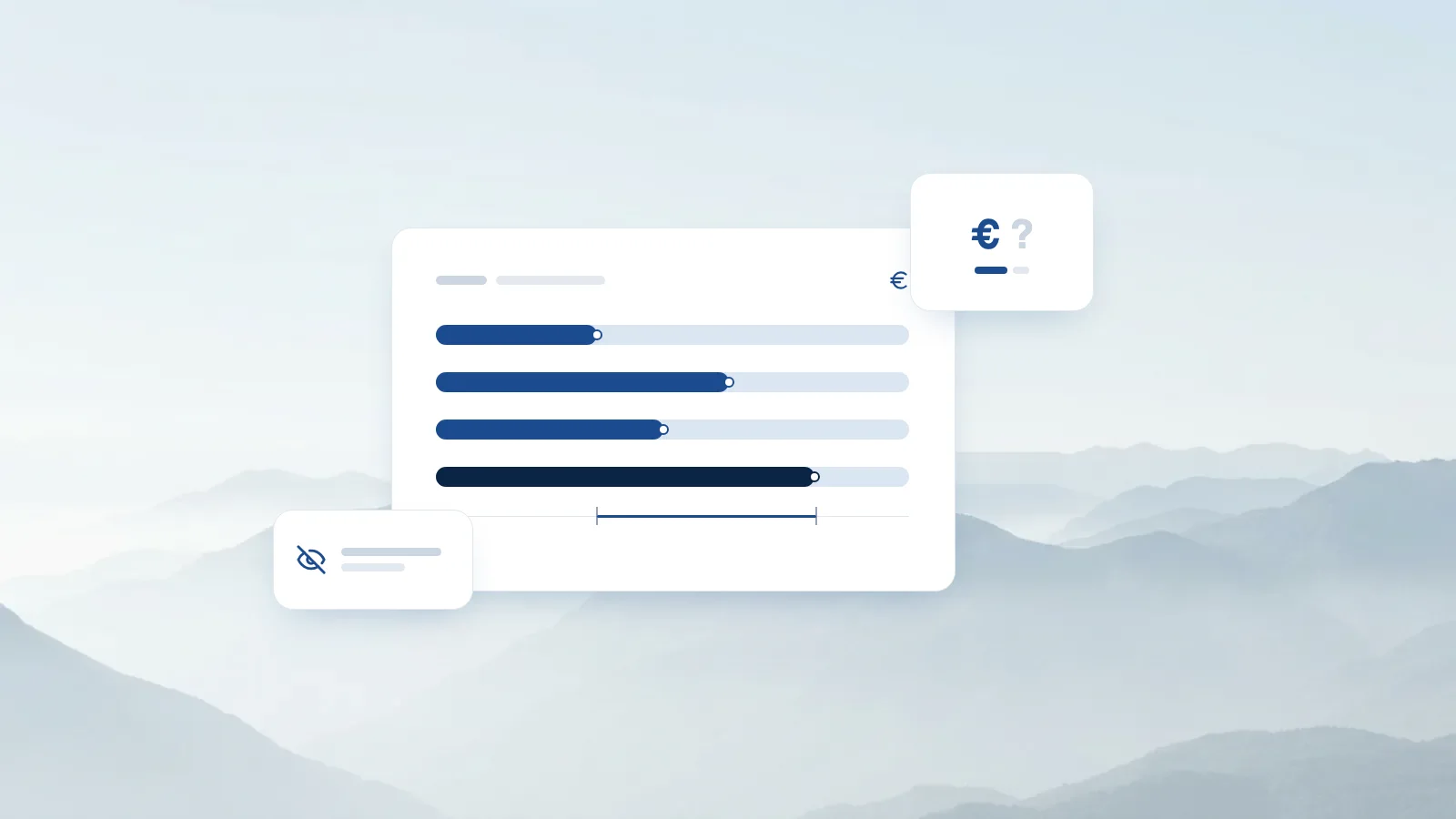
There is no flat rate. What we can explain well is what drives the effort, which items are often overlooked and how we arrive at a reliable ballpark.
By Nao IntelligencePublished Updated
“What does an AI project cost?” is the most common question in a first call, and the honest answer starts with “It depends on the project”. An assistant for inside sales that works inside existing tools is a different project from a private AI platform across QM records and ERP. What can be said in every case: what drives the effort, which items come on top of the external budget, and how you get to a number you can trust.
What kind of project is it?
Most AI projects in the Mittelstand fall into one of four categories, and the category alone says a lot about the effort:
A single automation. One clearly scoped process, such as pre-sorting incoming enquiries or reading delivery notes. Few people involved, one system, one measurable result. The smallest entry point.
Orientation and prioritisation. Before anything is built, clarify where AI really pays off in your company: collect use cases, assess them by value, feasibility and data readiness, set the order. That is consulting effort, not development effort, and the path we take with Getting started with AI.
An assistant or application in a department. A solution that works inside a department’s daily routine: a knowledge assistant for service, a review helper for technical documentation. Here data connection, integration and operations come into play.
A platform for the whole organisation. An AI platform used by all employees, connected to the document world, with roles and permissions, training and governance. That is a programme over several months, not a project over weeks. More under AI adoption and Private AI platforms and RAG.
What drives the effort
Within each category, a few factors decide the budget:
- Complexity and maturity of the use cases. A process that is already documented and runs stably is automated faster than one everybody does differently.
- Data situation and quality. Is the data structured and accessible, or spread across drives, mailboxes and legacy systems?
- Depth of integration. Should the solution only read, or also write back into ERP, CRM or the QM system? Every interface is effort; with regulated systems, validation effort too.
- Scope. One use case or five, one department or the whole company.
- Operations and maintenance. Who runs the solution after go-live, where does it run, how are models and content kept up to date?
- Regulation and governance. In medical technology, documentation duties, approval processes and evidence come on top, which other industries don’t have.
The costs that are rarely talked about
The external budget is only part of the truth. Many companies underestimate these items:
Internal time. An AI project needs your subject-matter experts: for interviews, reviews, tests and training. Expect several person-days from the departments and from IT, spread over the project.
Data work. If your data isn’t AI-ready, it has to be cleaned up first. That is often underestimated and can be a project of its own.
Licence and platform costs. Depending on the platform (OpenAI, Anthropic, Azure OpenAI, Langdock) there are running costs, per API use or per user. How high depends on usage and scope, and belongs in the calculation from the start.
Change management. If the AI solution changes the way people work, you need time for communication, training and acceptance. A solution nobody uses is the most expensive one.
How you get to a reliable number
Anyone who quotes a price without looking at your processes and data is guessing. Our path is therefore always the same:
- Intro call. In 30 minutes we clarify which category your project is and what the biggest unknowns are. That yields a first ballpark with the assumptions behind it.
- Scoping. For a concrete project we look at process, data and systems, usually in one or two sessions with the departments.
- Fixed-price proposal. On that basis you get a proposal with clear scope, deliverables and price, and you know beforehand what you get.
What you can do next
-
Use our AI readiness check for a first assessment of your starting point.
-
Read our article AI in the Mittelstand: where to start? for the methodological foundation.
-
Book an intro call, and we’ll go through your situation and give you a ballpark with the assumptions behind it.
Not sure where to start?
Take the free AI readiness check. You'll know more in 3 minutes. Or talk to us directly in a no-obligation intro call.